Many people make costly mistakes when buying a shrink fit machine. Some go for the cheapest option, only to discover their tool holders won’t fit. Others buy a unit with excessive power, but the temperature control can’t keep up—and the tool holder is scrapped within six months.
The problem lies in focusing only on price and power during selection, while ignoring other equally critical parameters.
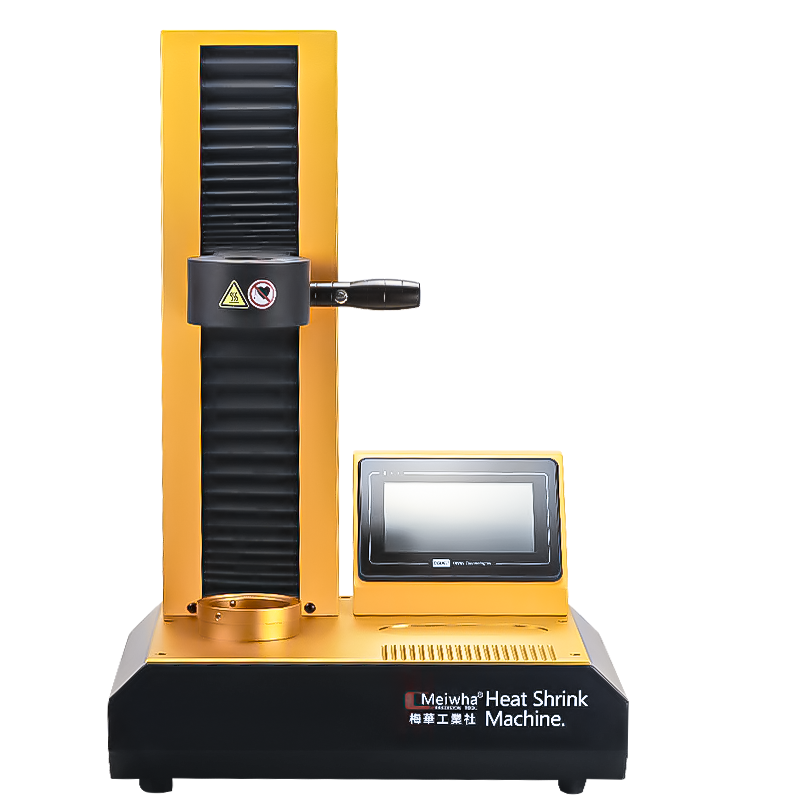
The following 6 points are what you really need to scrutinize when choosing a shrink fit machine for tool holders. Using the Meiwha ST-700 as an example, each point is explained clearly. If you’re in the process of selecting a machine, it’s worth saving this guide.
1. Power Is Not Everything: Why Temperature Control Matters More
Many people look at power first when choosing a shrink fit machine. 6.5kW, 5kW, 2.8kW—the higher the number, the more reassuring it seems.
But after buying, they find that while heating is fast, temperature control is unreliable. It relies on the operator timing with a stopwatch—two seconds longer today, two seconds shorter tomorrow—and the tool holder’s bore gradually deforms within these deviations. By the time clamping force fails, the tool holder is already ruined.
So power is merely the foundation. What truly determines tool holder lifespan is whether the machine can stop immediately once the target temperature is reached.
How do you assess temperature control? Ask three questions: What is the temperature control accuracy? Is there automatic overheat protection? Can the voltage adapt to local conditions?
Using these three questions to filter will eliminate many machines. For example, the Meiwha ST-700 is 6.5kW, with a heating range covering D3 to D32 tool holders. It features intelligent temperature control with automatic overheat protection—it stops automatically when the temperature is reached, without relying on human monitoring. The voltage supports 110-220V universal input, usable whether workshop voltage is unstable or the machine is exported to different countries.
2. Will Your Tool Holders Actually Fit the Machine?
This is where things most easily go wrong.
Many people only ask “Can it fit BT40?” before buying, and place an order once they get a yes. But when the machine arrives, they discover they also have several HSK63 holders in the workshop—and there’s no corresponding base on the machine.
So before buying, list out your workshop’s tool holder inventory. Write down the brand, interface type, quantity, and the longest and shortest dimensions clearly. Then use this list to check the machine’s compatibility range.
When selecting, focus on two things: which interfaces are included as standard, and how troublesome future changeovers will be.
Some machines only include one or two bases as standard, with everything else requiring paid optional accessories and lengthy disassembly for changeovers. The Meiwha ST-700 includes BT30/BT40 and HSK50/HSK63 as standard, covering most machining centers. If you have additional requirements for a tool holder, you may refer to the precautions regarding the holder sleeve.
3. Can the Coil Reach the Right Heating Zone?
Shrink fit heating should only heat the clamping zone of the tool holder, not roast the entire holder.
But many specification sheets only list maximum stroke, not minimum stroke. As a result, small tool holders sit with the coil positioned too high, heating the wrong area, and clamping force becomes insufficient. Long tool holders are even more troublesome—if stroke is insufficient, they can’t reach at all.
So when selecting, don’t just look at the maximum stroke number. Test with both the longest and shortest tool holders in your workshop to see whether the coil can align with the clamping zone.
How do you judge whether a machine is sufficient? For example, the Meiwha ST-700 has a stroke of 10 to 400mm, with a Taper Induction Coil of φ56mm and height of 64mm, covering common long tool holders and deep-cavity extended tool holders. Heating and cooling are completed at the same position—no need to move things around. Very convenient.
4. How Temperature Control Affects Tool Holder Life
Shrink fit tool holders undergo repeated heating and cooling cycles. A little hotter today, a little faster cooling tomorrow—it seems fine. But the bore gradually deforms through these repeated deviations.
By the time clamping force fails, the tool holder is already ruined.
So temperature control is the baseline for tool holder lifespan. The key is whether there is automatic overheat protection—can it stop directly when temperature exceeds the limit, rather than waiting for the operator to notice.
This protection makes a huge difference. For example, the Meiwha ST-700 uses a touchscreen with Chinese and English interfaces, one-click setup. It has automatic overheat protection—temperature exceeded, it stops directly. A red-hot state causes permanent damage to the tool holder; sometimes just those few seconds matter.
When purchasing, ask clearly: Is there overheat protection? Will temperature anomalies trigger an alarm? Can the operation interface switch between multiple languages?

5. Air Cooling vs. Liquid Cooling: Which Fits Your Daily Output?
After heating and inserting the tool, you must wait for cooling and contraction to complete before clamping is secured. Cooling speed directly determines tool change cycle time.
At this point, some people agonize: air cooling or liquid cooling?
Some assume liquid cooling is always better. Liquid cooling is faster, but maintenance is troublesome—you need to change coolant, prevent leaks. If production volume hasn’t reached that level, it’s just wasted money.
So the key is not which is “better,” but how many tools you change per day.
Look at your daily production. If you change fewer than 50 tools per day, air cooling is sufficient and saves maintenance hassle. If you change more than 150 per day, air cooling may become a bottleneck—that’s when liquid cooling is worth considering. In between, it depends on how tight your cycle time requirements are.
By this standard, the ST-700 uses air cooling. Its positioning is general machining and tool rooms—sufficient, worry-free, no fuss. It is not a high-intensity production machine for hundreds of tool changes per day.
6. Detail Design: The Hidden Factor in Daily Efficiency
Things not visible on specification sheets often affect your mood most during daily use.
For example, does the worktable have partitioned slots to prevent tools from rolling around? When switching tool holder types, does the conversion sleeve require lengthy disassembly? After unboxing, are the collets and bases included, or must they be purchased separately?
These details are most easily overlooked during selection, but most affect efficiency during daily use. When purchasing, ask clearly: which collets and bases are included as standard, how much do conversion sleeves cost, and how often do wear parts need replacement?
For example, the Meiwha ST-700 is quite practical in these areas: the worktable has partitioned slots, conversion sleeves enable quick changeovers, and it ships with φ4 to φ12 collets plus BT40 and HSK63 bases—ready to use out of the box.

Final Thoughts
Choosing a shrink fit machine comes down to six words: sufficient, durable, and usable.
Once you’ve checked these six points, you basically won’t buy wrong.
If your workshop has many tool holder types, unstable voltage, and you don’t want to worry about temperature control, the Meiwha ST-700 is worth adding to your shopping list.
For detailed specifications, visit www.meiwhatool.com. If you’re unsure, send us your tool holder list and we’ll help you verify it.
Post time: Oct-10-2026