Tapping is a job that shop-floor workers both love and hate. With manual tapping, veterans rely on feel, while newcomers strip the thread on their first try. A broken tap means a scrapped workpiece — and another half hour wasted extracting the broken piece. Switch materials and the trouble multiplies: steel, aluminum, and plastic each demand entirely different parameters, so efficiency never gets off the ground.
This isn't one factory's headache — it's a snapshot of tapping across the entire manufacturing sector. Tapping used to depend on experience; now it's moving from "feel" to "data." No longer mere muscle work, tapping has become intelligent work.
Against this backdrop, electric tapping machines are becoming the go-to choice in more and more workshops. So how do you choose one? A few key points deserve attention.
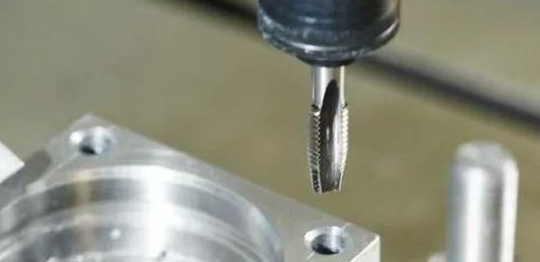
Take Meiwha's electric servo intelligent tapping machine as an example. The first is torque overload protection. The most fundamental difference from manual tapping. When torque goes past the limit, the chuck slips on its own, so the tap never gets pushed to the breaking point. Without this, taper breakage will become an unavoidable problem, with it, breakage becomes something you can control.

The second is tapping range. M3 to M36 covers the vast majority of specifications, but don't blindly pick the biggest. If your work is mainly M6–M12, a model covering M3–M16 is plenty — lighter and more space-efficient.
Then come speed and working radius. Take the MW20, for example. You can dial the speed anywhere from 0 to 416 r/min — slow it down for steel, open it up for aluminum. With a 1200 mm working radius, it handles bigger workpieces without issue. But if you're only running small parts, a shorter radius will be easier to move around.
Finally, the collet standard. National standard is universal; Japanese standard offers higher precision. The MW16 ships with 8 collets, the MW36 with 11 — if that's enough, there's no need to buy more.
Whether in a small workshop or heavy-duty machining, mixed multi-material production can be handled by a single machine switching modes — no changing machines, no re-tuning parameters.

This isn't about tapping faster — it's about tapping smarter. Upgrading your tapping process is no longer a matter of "if," but "when." For specific parameters or to set up a trial run, feel free to reach out to Meiwha.
Post time: Oct-14-2026