
High-Efficiency Workpiece Clamping & Tooling Setup
The Technological Landscape of CNC Drill and Tap Machines for Internal Threading
Internal threading represents one of the final, highest-risk operations in metal cutting. When a tap breaks inside an intricately milled, nearly completed engine cylinder head, aerospace manifold, or EV battery enclosure, the entire component risks being scrapped. Over the past decade, manufacturing industries have transitioned rapidly from conventional vertical machining centers (VMCs) to dedicated, high-speed CNC Drill and Tap Machining Centers (commonly referred to as tapping centers or DT centers). Engineered specifically for high-torque spindle reversals, lightning-fast rapid traverses, and instantaneous feed synchronization, these compact machines have redefined cycle time and yield economics across precision engineering sectors worldwide.
Commercial manufacturing operations require high repeatability, microscopic pitch tolerances, and maximum chip clearance efficiency. Unlike external thread turning or thread rolling on tubular stock, internal thread generation must manage the aggressive constraints of blind-hole chip evacuation, localized frictional heat buildup, and cutting edge torsional stress. Consequently, modern CNC drill and tap machinery pairs high-acceleration servomotors (often reaching 1.5G to 2.0G axis acceleration) with synchronized rigid tapping cycles (G84/G74), closing the positioning loop directly between spindle rotation and Z-axis linear advance within microsecond update intervals.
Key Engineering Kinematics: Synchronous Rigid Tapping vs. Tension-Compression
Historically, machinists relied on floating tap holders with mechanical axial tension-compression compliance to compensate for the slight mismatch between machine spindle rotation and lead screw advancement. While functional at modest spindle speeds (under 800 RPM), mechanical compliance introduces axial play, limits thread depth precision, and accelerates tap wear due to irregular flank loading. Contemporary CNC drill and tap machines leverage full digital CNC interpolation where the spindle drive functions as a true C-axis servo.
Under rigid tapping (synchronous tapping), the CNC controller computes the exact thread pitch ($P = 1 / TPI$ or metric pitch in mm) and synchronizes the Z-axis servomotor encoder with the optical or magnetic spindle encoder. This enables instantaneous spindle decel-stop-reversal at the bottom of a blind hole without mechanical shock. When working in conjunction with high-pressure through-spindle coolant (TSC) exceeding 30 to 70 bar, micro-chips generated during internal thread shearing are instantaneously evacuated backward along the flutes, mitigating bird-nesting and catastrophic tap shear.
Dynamic Spindle Response
Direct-drive inline or built-in motor spindles deliver explosive torque from standstill to 4,000–6,000 RPM in fractions of a second, slashing reversal latency in multi-hole aluminum workpieces.
High-Rigidity Dual-Contact
Utilizing BBT30 or HSK-A40/A63 interfaces, simultaneous taper and face contact eliminates spindle deflection and axial creep during high-feed peck drilling and tough threading cycles.
High-Pressure TSC Delivery
Through-spindle coolant directed straight through the cutting tap flutes flushes high-temperature micro-swarf from blind holes, boosting tap tool life by up to 320%.
Deep Application Scenarios in Workpiece Internal Threading
The operational versatility of CNC drill and tap machines spans multiple challenging manufacturing domains, each imposing unique physical demands on cutting tools and workpiece holding fixtures:
- Automotive E-Mobility & Powertrain Castings: Electric vehicle (EV) battery enclosures, motor housings, and inverter trays contain dozens of blind M4 to M10 threaded fastening points in structural die-cast aluminum (A380, ADC12). Cold-forming (roll) taps paired with CNC tapping centers eliminate chips entirely while yielding thread flanks with superior shear strength and surface hardness.
- Aerospace Actuation & Structural Hardware: In exotic nickel superalloys (Inconel 718) and titanium (Ti-6Al-4V), internal threading demands ultra-rigid vibration damping. Solid carbide thread mills mounted on high-concentricity shrink-fit tool holders allow circular ramp interpolation, enabling precise gauge thread production without subjecting delicate machine axes to severe torsional spikes.
- Consumer Electronics & 3C Enclosures: Smart device chassis, camera bezels, and 5G communications baseplates necessitate microscopic threads ranging from M0.8 to M2.5. Micro-tapping centers running at 8,000+ RPM execute hundreds of threaded blind holes per minute with zero thread stripping or burr formation.
- Hydraulic & Fluid Manifolds: High-pressure hydraulic control blocks demand leak-free NPT, BSPT, and SAE straight internal threads. Rigid tapping cycles ensure precise thread engagement depths, guaranteeing pressure containment up to 400 bar under cyclic hydrostatic loading.
High-Rigidity Toolholding & Modular Clamping


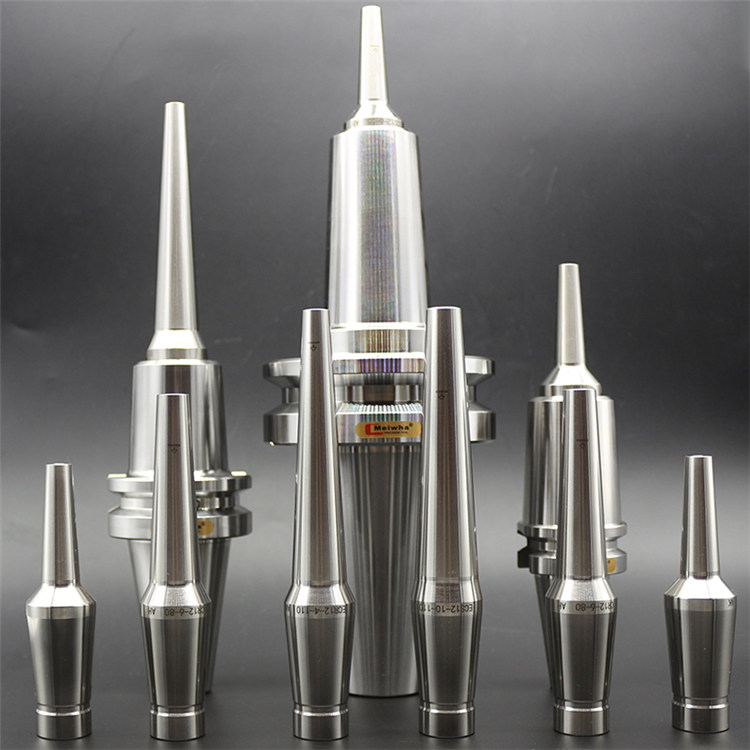
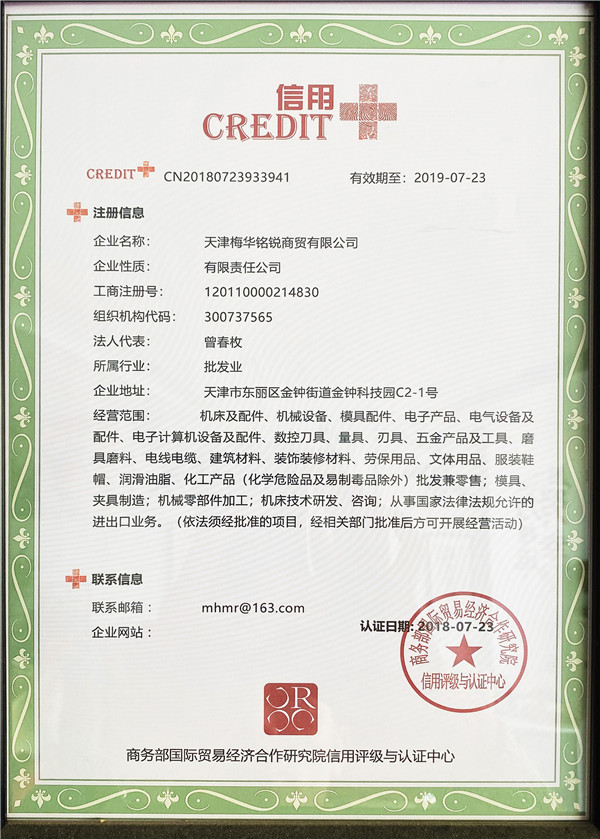
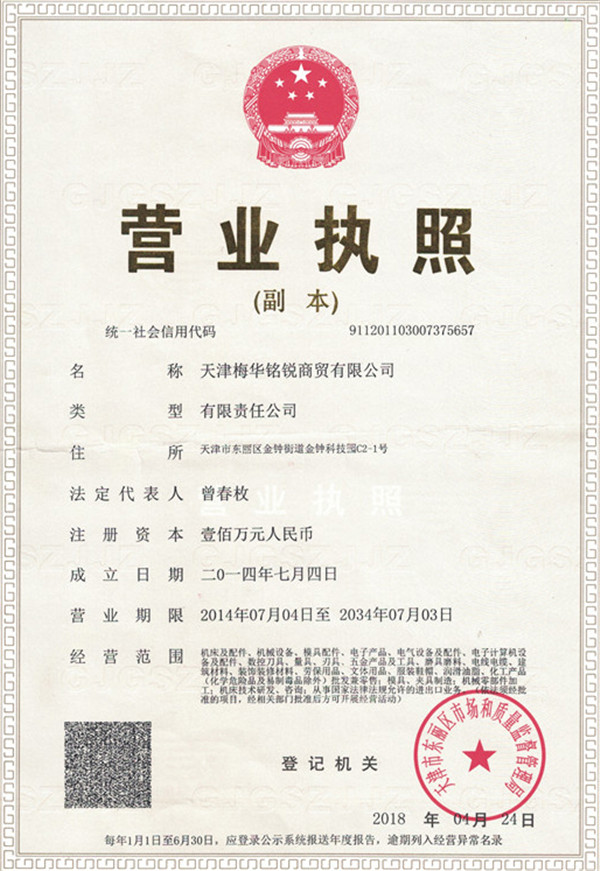
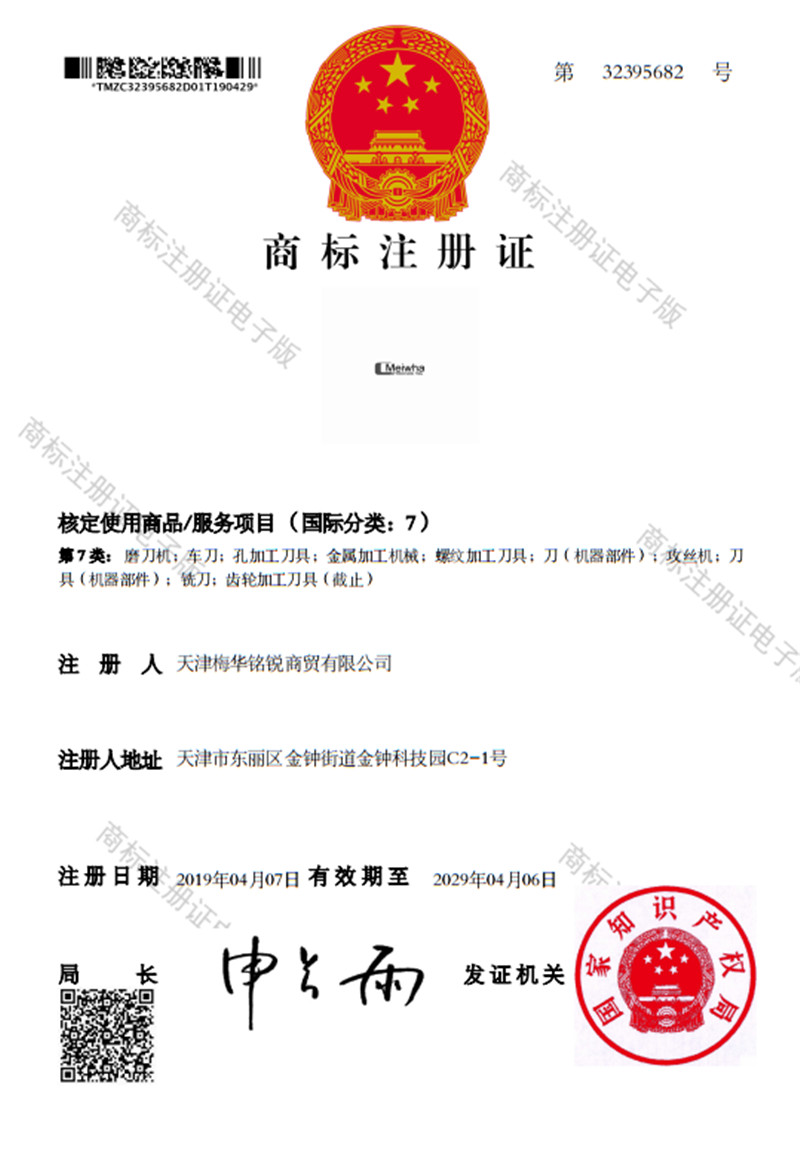
Tianjin MeiWha Precision Machinery Co., Ltd.
Tianjin MeiWha Precision Machinery Co., Ltd was founded in June 2005. It is a professional manufactory which engaged in all kinds of NC cutting tools, include Milling tools, Cutting Tools, Turning Tools, Tool holder, End Mills, Taps, Drills, Tapping Machine, End Mill Grinder machine, Measuring tools, Machine tool accessories and other products.
Our company combines industry advantages, integrates product resources, and inherits all customer-oriented business concepts, only provides customers with the right products, and provides customers with one-stop procurement services. At the same time, with excellent product quality, precise delivery time, reasonable and competitive prices, it has won the approval of the industry and the support of our customers.
Global Distribution & Strategic Location
Our company is located in Jingzhong Industrial park, Dongli District, Tianjin, covering an area of more than 5000 square meters, with 1500 square meters of modern office space. Branches, direct stores, subordinate branch agents or special distributors are arranged in various regions to form outlet distribution services. At the same time, MeiWha products export include Dubai, The United Arab Emirates, Switzerland, France, South Africa, India, The Philippines, Thailand and so on.
Our standard tools meet the highest quality standards, which we have been able to prove a million times to satisfied customers since 2005. With our mature product portfolio we offer solutions for the tasks around drilling, milling, countersinking and reaming. With high commitment and ambition we continue to develop and optimize our solid carbide line. The excellent technical properties as well as the availability which can be viewed online offer our customers and partners the best conditions for optimizing their processes.
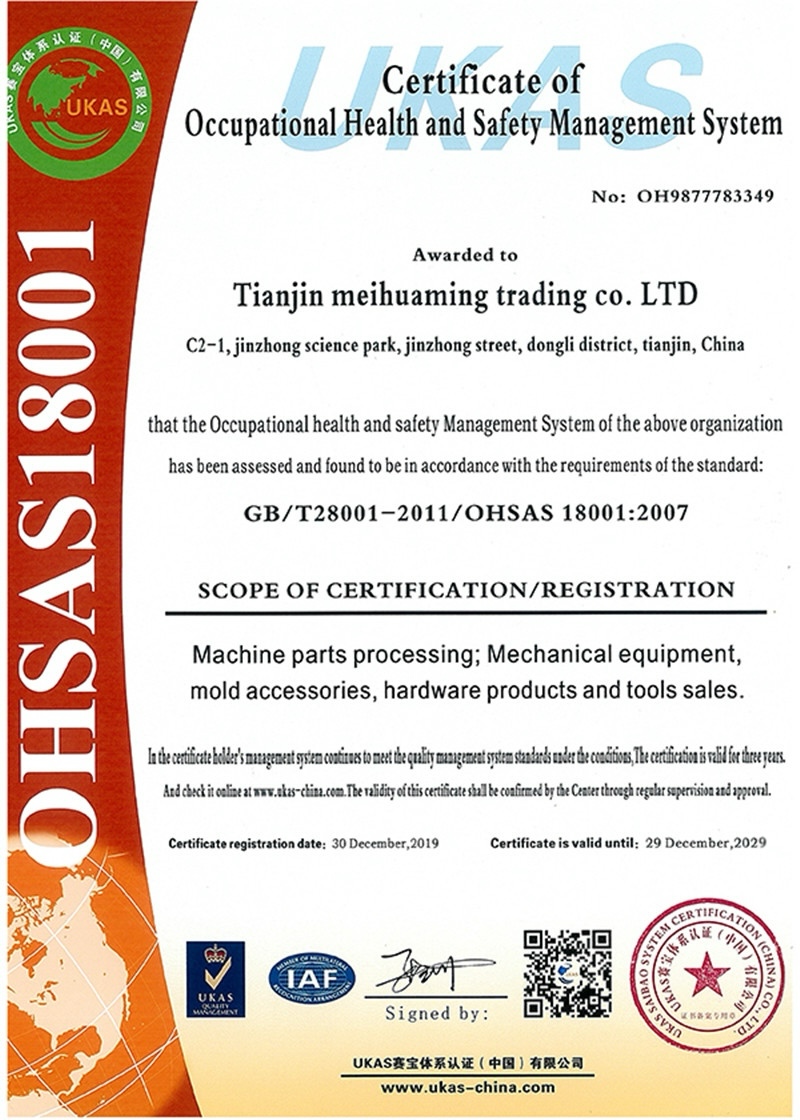
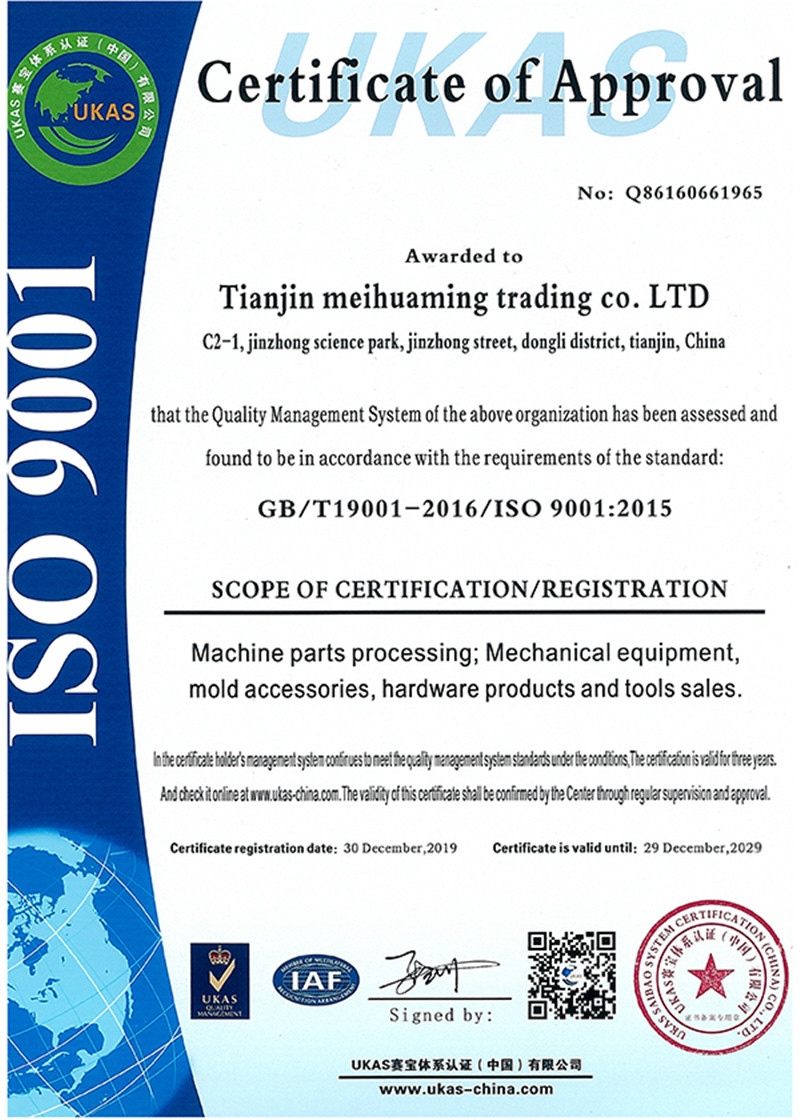
International Machine Tool Exhibitions
Tianjin MeiWha Precision Machinery Co., Ltd. continuously participates in premier metalworking, tool technology, and smart machining expos worldwide, connecting directly with tier-1 automotive suppliers, aerospace contractors, and machine tool builders.


Technological Trends: AI Monitoring & Real-Time Torque Detection in Thread Machining
The convergence of Industry 4.0 IoT analytics and CNC drill and tap machine kinematics has established intelligent predictive thread machining as an industry norm. Thread tapping operations are uniquely vulnerable to sudden catastrophic tool failure due to chip packing or material hardness variances. Modern CNC drilling and tapping platforms now integrate high-speed digital current monitoring algorithms directly within the spindle digital servo drive.
By comparing instantaneous cutting torque curves against baseline healthy tap torque signatures in real-time, the CNC controller detects micro-chipping or thermal seizure within milliseconds. Should cutting resistance exceed predefined threshold parameters by even 8–12%, the system automatically commands a synchronous peck-tap retraction routine, cleanses the threaded cavity with high-pressure coolant, or halts the process before tap fracture occurs. This real-time intelligence virtually eliminates destroyed workpieces in high-value components.
Optimizing Tooling Selection: Flute Geometry, Tool Coatings, and Clamping Rigidity
Achieving superior internal thread tolerance (ISO Class 2 / 6H or ANSI Class 2B/3B) requires harmonizing machine capabilities with optimized cutting tool selection and rigid workpiece fixturing:
- Spiral Flute Taps: Engineered with right-hand helix angles (35° to 48°), these taps lift chips upward out of blind holes, preventing swarf compaction at the hole bottom.
- Spiral Point (Gun) Taps: Featuring an angular forward cutting edge, spiral point taps shoot continuous curled chips forward through open through-holes, minimizing cutting face friction and supporting higher cutting speeds ($Vc > 35 \text{ m/min}$ in structural steels).
- Advanced Multilayer PVD Coatings: Application of TiAlN, AlCrN, or Diamond-Like Carbon (DLC) coatings provides surface micro-hardness up to 3300 HV and thermal stability up to 900°C, preventing built-up edge (BUE) when machining abrasive cast irons or sticky ductile alloys.
- High-Concentricity Clamping: T.I.R. (Total Indicated Runout) exceeding 0.005mm severely impairs tap load distribution, overloading individual cutting teeth and causing oversized thread pitch diameters. Using MeiWha shrink-fit chucks, hydraulic chucks, or BT-ER high-precision holders ensures concentricity and balanced cutting loads across all thread flutes.
Our Latest Products for High-Performance Machining





-
Taiwan head office: No. 138-198, Xing'an Road, Zhuangmeili, Dajia District, Taichung City, Taiwan台中市大甲區莊美里興安路138之198號Branch office: No.8 Baisui Science Industrial park,Haihang West Road,Ninghe District,Tianjin,China