Many shops purchase a shrink fit machine only to find that tool holder life doesn’t meet expectations.
Sales representatives promise three years of service, yet holders start losing clamping force in just over a year. Upon inspection, the inner bore shows oxidation marks and dimensional drift. A new holder is installed, and the same problem returns.
The issue often isn’t the tool holder itself—it’s the heating process.
Shrink fit technology relies on thermal expansion and contraction to expand the holder’s inner bore, insert the tool, and then clamp it as the holder cools. This process demands extremely precise temperature control: insufficient heat means the bore doesn’t expand enough for tool insertion; excessive heat alters the metallurgical structure of the holder material, causing permanent deformation of the inner bore. The margin between “too much” and “just right” can be mere seconds.
Many shrink fit machines use fixed-timer heating—operators set the duration based on experience, and heating stops when time expires. However, the holder’s initial temperature, ambient temperature, and coil aging all affect actual heating results. A setting that works perfectly today may be off next month. Without the operator knowing, the holder gradually degrades through repeated “slightly overheated” cycles.
Shrink fit processes actually demand rigorous attention to operational details. The induction coil should be positioned approximately 10–15 mm above the mouth of the tool holder before heating. Before you heat anything up, make sure both the holder bore and the tool shank are completely clean — no oil, no leftover debris, nothing stuck on them. And never ever turn the machine on when there’s no tool holder properly seated inside. If you do that, you’ll end up damaging the induction coil. These details aren’t monitored daily, yet tool holder life depends on them.
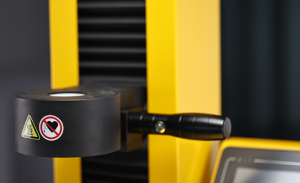
Meiwha’s solution on the ST-700 uses intelligent temperature control with automatic overheat protection. The system keeps a close eye on the temperature the whole time. The second it hits your preset value, it cuts off the heat right away — no more guessing or relying on someone to judge when to stop. If the temperature ever climbs past the safe limit, it automatically kills the power. That way, you won’t end up ruining the holder for good by letting it get way too hot and turn red.

This logic runs through Meiwha’s entire shrink fit machine product line. The ST-700 is the flagship model, featuring 6.5kW power with wide voltage compatibility, designed for high-volume production and long tool holder applications. Heating and cooling are completed at the same position, reducing burn risks from moving hot tool holders. The ST-500 covers general machining and mold shops with 5kW power. Models differ, but the core design principles remain consistent: fast heating cycles, precise temperature control, rigid construction ensuring heating head alignment consistency, and overheat protection with insulated components for operational safety .


A shrink fit machine isn’t a consumable—it’s meant to serve for years. Choosing a machine is essentially choosing how deeply a brand understands this process.
If you’re also struggling with short tool holder life and low tool change efficiency, visit the Meiwha website at www.meiwhatool.com. The site offers the complete shrink fit machine product line and technical documentation—from the ST-700 to the H5000C, from operation tutorials to maintenance guidelines, all written for people who actually use the machines. Follow Meiwha to learn more about shrink fit process details, and to understand how a shrink fit machine should be selected, used, and made to deliver maximum value.
Post time: Oct-12-2026